America’s Safety Net Just Seems Broken
Over the past few years, my wife and I have been asked the same question countless times: “Why did you leave the United States?”
The short answer is this: we wanted a place that felt easier to live.
But what does that really mean? To many, that sounds vague and perhaps even sensational. How do you quantify the likelihood of a greater opportunity to live by moving to a new location? Well, two mortality researchers did just that recently:
The Alarming Reality
A recent article in Slate titled “American Millennials Are Dying at an Alarming Rate” put numbers to something we’ve long felt in our bones. It opened with this sobering truth: “About 3 million Americans die every year. Compared with other rich countries, we die at an alarmingly higher rate: one-quarter of those deaths wouldn’t have occurred if America were only as deadly as its peers.”
When researchers zoomed in on younger age groups, the picture became even bleaker. Among “early adults” aged 25 to 44, 62 percent of deaths “wouldn’t happen if we had a death rate that matched our peers”—nearly two out of every three deaths.
Think about that: two-thirds of young Americans who die each year would still be alive if they lived in another wealthy nation.
The researchers estimate that in 2023 alone, the U.S. saw more than 700,000 excess deaths among young and middle-aged adults compared to peer countries. People who should have lived but didn’t. That’s not just a data point. That’s hundreds of thousands of mothers, fathers, siblings, partners, and children who should still be here.
What’s Driving This Crisis
The reasons for America’s higher death rate aren’t mysterious. The Slate article highlights several:
- Opioid overdoses: “Drug overdose deaths quadrupled between 1999 and 2019.”
- Suicides: “The rate of suicide among 25- to 34-year-olds increased 30% between 2000 and 2019.”
- Gun violence: Americans are ten times more likely to be killed by guns than Canadians. Schools, grocery stores, churches: no space feels truly safe.
- Chronic disease: Diabetes, hypertension, and other conditions are showing up earlier, fueled by stress, inequities, and lack of affordable care.
- Pandemic response: During COVID, the U.S. had “three deaths for every two in peer countries,” and the impact fell especially hard on younger, working-age adults.
Each of these crises would be concerning on its own. Together, they’ve created a generational catastrophe. For us as Black Americans, these stats aren’t surprising, even if they are shocking.
The article notes that Black Americans are disproportionately impacted. That makes sense to us. Structural racism has long created conditions where Black communities carry heavier burdens: higher maternal mortality, higher rates of preventable illness, more exposure to violence, more economic precarity. We hear so much talk about Black resilience, but resilience shouldn’t be a prerequisite for survival.
Why Halifax — and Why Nova Scotia
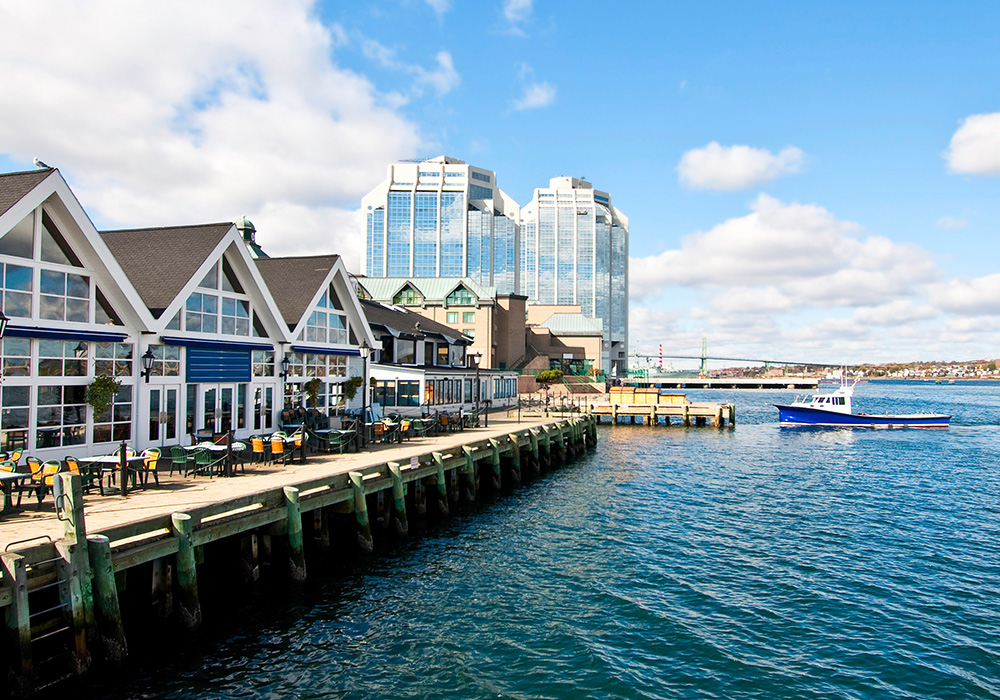
When we left the U.S., we weren’t just stepping away from something. We were stepping into a history that goes back centuries.
Black people have been coming to Nova Scotia in search of freedom and safety since the 1700s. Enslaved Africans escaped to Halifax during the American Revolution. Thousands of Black Loyalists resettled here after siding with the British, hoping for a life away from slavery. Later, Black refugees of the War of 1812 were also brought to Nova Scotia, building communities that still stand today.
We’re not the first to look at America and say, “This place is killing us. We need to leave.” We’re part of a lineage of Black migration and survival, of people who chose life—even if it meant starting over in unfamiliar territory. That’s part of why Halifax feels like more than just a city to us. It feels like a continuation of a story. Canada is not perfect—racism exists here too—but the baseline is different. With a stronger social safety net, life feels like it’s for living not just enduring.
Choosing Life
When we read in the article that “U.S. life expectancy has declined for three consecutive years, something not seen in a century,” it hit us hard. The U.S. has been ringing alarm bells about its broken systems for decades, but the trend is moving in the wrong direction. At some point, you have to ask yourself: do I stay inside the burning house, or do I get out?
For us, leaving was about more than geography. It was about choosing a better quality of life. And while we can’t tell anyone else what to do, we can share this truth: if you’ve ever wondered whether there’s another way to live—there is. We found it here. And you might, too.